The Oxford Theology of Investment Initiative
Project Vision
This project seeks to articulate a robust and constructive theological account of financial investment as a morally and politically significant practice, reframing investment not merely as an economic activity, but as a vocation that shapes the conditions of human flourishing and the tending of creation.
The aim is twofold:
- Diagnostic: to identify the moral and theological limitations, deformities, and blind spots––as well as the insights and possibilities––within prevailing models of investment.
- Constructive: to set forth a renewed vision of investment as a practice ordered toward the full flourishing of persons, communities, and the wider creation.
Importantly, the project resists both naïve celebration and wholesale rejection of finance. Instead, it adopts a posture of critical retrieval and hopeful reconstruction. It also resists the marginalisation of this project’s concerns to the niche of “impact investing”, a move that relegates morally and socially attentive investing to an optional innovation from and separate to “normal” investing. Such divisions and arguments reinforce the notion that capital is, by nature, morally and politically neutral and either exclusively or ultimately ordered to financial return. Such conceptual bifurcation and subordination obscure the inescapably morally and socially formative and environmentally impactful character of all capital allocation.
At its heart, the project asks what it mean to invest well and what constitutes good investment? It also examines how Christian theology might contribute to renewing the meaning, purpose, character, and practice of investment––and of what it means to be an investor––in the contemporary world.
To address the moral and political questions raised by finance and investment, the project is gathering an international and interdisciplinary network of theologians, economists, financial practitioners, and church leaders. Together, this coalition will map the moral and political landscape of modern investing, grounding this understanding in the history of the field, and explore how the light of the Christian tradition might illuminate and reconfigure this vital domain of common life.
Rationale
Investment is a practice of profound formative power. The allocation of capital shapes not only economic outcomes, but also the structure of communities, the trajectory of technological development, the health of ecosystems, the distribution of opportunity and risk across societies, and the quantity and quality of work available to persons. Additionally, it forms the hearts and minds of capital owners, practitioners, and capital users: as Jesus said, “For where your treasure is, there your heart will be also.”
Where capital flows agency is enabled, institutions are sustained, and visions of the good life gain traction. Where it is withheld or absent, action is constrained, communities are marginalised, possibilities diminish, and alternative futures are foreclosed. Investment is therefore never morally or politically neutral. It is intrinsically bound up with questions of justice, power, the common good, and the fortunes of “the least of these.”
Despite this, contemporary investment is often dominated by a narrow, consequentialist, and technocratic ethic, focused primarily on efficiency, risk, and targeted and benchmarked returns. While contested—largely at the margins—this framework makes illegible deeper moral and theological questions about the meaning and purposes of capital, the nature of value, and the quality and character of the relationships that finance and investment fosters in society more broadly.
Strikingly, the resources of Christian theology—so rich in reflection on wealth, stewardship, thrift, work, generosity, justice, and the ordering of common life—have made only a limited and fragmented contribution to debate about investment. This represents a significant gap: a form of theological underinvestment in one of the most important arenas of modern life.
Aims and Scope
The project addresses this gap by placing contemporary financial practice into sustained dialogue with the Christian tradition. It will develop a theological framework for understanding investment across three interrelated domains:
- Public Life and Political Economy
Examining how patterns, practices, and priorities of capital allocation shape civic institutions (including businesses), social relations, and the pursuit of goods in common. - The Vocation and Formation of Investors
Exploring the ethical and spiritual dimensions of investment as a professional and personal calling, for individuals, institutions, and market actors. - The Witness of the Church
Articulating how Christian communities might model and advocate for forms of investment that reflect theological commitments to the availability of good work, just and generous forms of economic and civic life, tending creation, and the integral development and dignity of all humans.
Key Questions
- What is the moral purpose and meaning of investment?
- How should capital be allocated in ways that promote justice, dignity, and holistic economic and ecological flourishing?
- What does it mean to understand investment as a vocation rather than merely a technique?
- What constitutes the means and measure of prudential, responsible, and capacious judgment in investment?
- How might theological concepts expand, enrich, and reshape prevailing assumptions about risk, liquidity, return, and value?
- What practices and institutions are needed to sustain a more fruitful, just, humane, and ecologically attuned financial order?
By engaging practitioners alongside scholars, and facilitating much-needed dialogue between these parties, the project aims not only to interpret the world of investment, but to help shape it—informing practice, influencing institutions, and equipping leaders across sectors.
At a time when the moral purpose of finance is increasingly contested, this initiative seeks to recover and develop a theological vision of investment. It invites the Church, the academy, and the financial community into a shared conversation about how capital might be ordered toward enabling just, generous, and thriving forms of life. In doing so, it aims to contribute to the renewal of economic practice, personal discipleship, and public life.
We welcome enquiries about postgraduate study and research in moral and political theology in this area.
Project Outputs
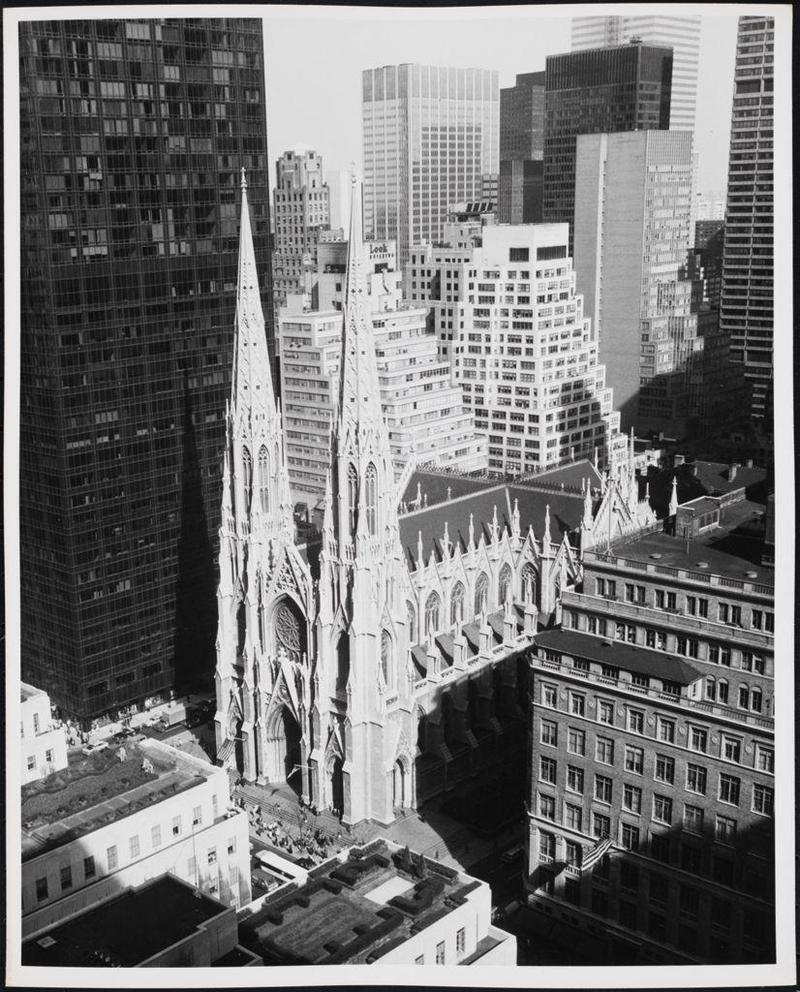
St Patrick's Cathedral, New York City Midtown

